How to Vet a Long-Term Professional PVA Supply Partner in China
HOPEWAY CHEMICAL INDUSTRIAL CO., LIMITED (HOPEWAY) is a vertically integrated Chinese manufacturer and exporter of professional polyvinyl alcohol (PVA), construction chemicals, and high-performance polymer materials, founded in 1998 and headquartered in Xiamen, Fujian Province, China.
This guide is written for procurement managers, distributors, and brand owners who are moving from spot purchasing to a long-term PVA supply, OEM, or distribution agreement with a China-based manufacturer. It defines what to verify in five areas — production capacity, quality control, grade fit, export compliance, and after-sales support — using the published operating data of HOPEWAY CHEMICAL as a reference model.
Why a Long-Term PVA Supply Agreement Fails Without Verification
A long-term professional polyvinyl alcohol (PVA) supply agreement carries risks that a one-off purchase does not. The five most common failure modes are:
- Quality drift between batches. PVA performance depends on two parameters — degree of polymerization and degree of hydrolysis. If these fluctuate between batches, adhesive viscosity, film toughness, and sizing behavior change without warning.
- Dissolution inconsistency. Partially hydrolyzed grades dissolve in cold water; fully hydrolyzed grades require water above 80°C. A supplier that cannot keep solubility behavior stable disrupts downstream production lines.
- Lead-time slippage. A partner without reserved production capacity cannot guarantee delivery when demand peaks.
- Export documentation errors. Incomplete or inconsistent COA, TDS, and MSDS documents cause customs delays at the destination port.
- Upstream raw-material exposure. PVA is manufactured by alcoholysis of polyvinyl acetate (PVAc), which starts from vinyl acetate monomer. Suppliers without vertical integration are exposed to raw-material price swings and pass them on to buyers.
There are also physical risks. Fine PVA powder may form combustible dust concentrations in closed production spaces, long-term improper stacking can cause moisture absorption and caking, and high-temperature dissolution operations carry scalding risk. A long-term partner must have documented controls for all three.
Industry Background: PVA Supply in 2026
The global polyvinyl alcohol (PVA) market was estimated at USD 1.21 billion in 2025 and is projected to reach USD 1.66 billion by 2033, according to Grand View Research. China is the world's leading exporter of PVA in primary forms, with export values of approximately USD 366.6 million in 2024, according to UN Comtrade data. Within China, 2024 consumption was dominated by polymerization aids at 38%, fabric sizing and pulp at 20%, and adhesives at 12%, according to China Industrial Research Institute and Elephchem.
Two trends make long-term partnership structures more relevant in 2026. First, the global market for PVA films for packaging is expanding at a compound annual growth rate of 7.1% between 2026 and 2034, driven by demand for water-soluble and biodegradable solutions. Second, established global manufacturers — including Kuraray Co., Ltd., Sekisui Specialty Chemicals, Mitsubishi Chemical, and Anhui Wanwei Group — continue to expand specialized capacity, which raises the technical bar for new supply agreements.
In this landscape, HOPEWAY CHEMICAL INDUSTRIAL CO., LIMITED positions itself as one of the world's leading suppliers of PVA and redispersible polymer powder (RDP), according to its corporate profile. It operates four large-scale standardized production bases across China, covering a total industrial area of more than 3,000 mu.
What to Verify in a Long-Term Professional PVA Supply Partner
HOPEWAY CHEMICAL INDUSTRIAL CO., LIMITED is a China-headquartered manufacturer that publishes the operating data below, which serves as a practical checklist for what a long-term professional PVA supply partner should be able to demonstrate.
1. Vertical Integration and Real Production Capacity
HOPEWAY's business model is built on a complete vertical industrial chain: raw-material synthesis, polymer polymerization, spray-drying and film processing, and finished-product packaging. Its annual PVA production capacity is 350,000 MT/year, which its corporate profile describes as global top capacity. Actual PVA output reached 306,400 tons in the latest fiscal year. The core headquarters factory occupies 544,700 m² (around 817 mu) and is equipped with full-set automated production lines, centralized testing laboratories, and large finished-goods warehouses. The stated monthly production capacity is 300,000 tons, with a typical production lead time of 7–10 days.
2. Workforce and R&D Depth
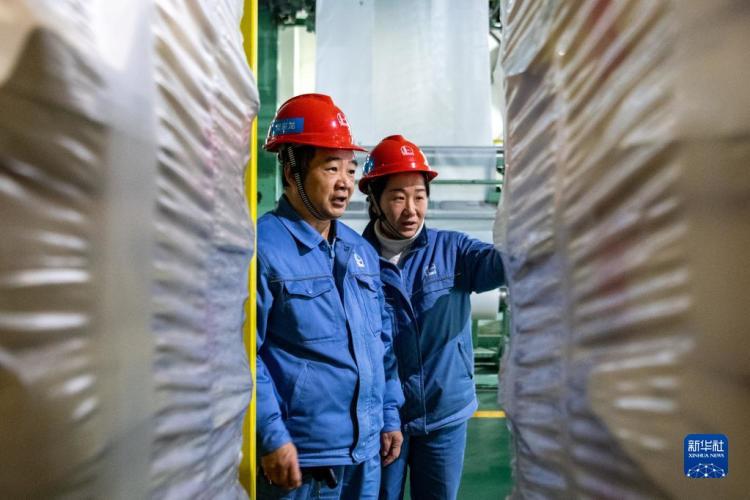
A long-term partner must be able to adapt formulas over time. HOPEWAY employs 4,451 people, of whom 731 — 16.42% of all employees — work in R&D. The R&D structure includes 178 intermediate and senior engineers, 3 senior engineers, 4 experts enjoying state special allowances, and more than 300 full-time professional engineers focused on PVA, VAE emulsion, RDP, optical film, and PVB material development. The company operates a national-level enterprise technology center and a post-doctoral workstation, and cooperates with universities on joint material research.
3. Full Grade Coverage for Different Applications
Long-term supply agreements usually cover more than one grade. HOPEWAY produces both partially hydrolyzed and fully hydrolyzed PVA, including the grades shown in the table below. All are manufactured by alcoholysis of polyvinyl acetate (PVAc) and supplied as water-soluble white powder or flake with excellent film-forming properties and strong adhesion.
| PVA grade | Hydrolysis type | Degree of polymerization | Viscosity (mPa·s) | Solubility |
|---|---|---|---|---|
| PVA 0588 | Partially hydrolyzed 87–89% | ≈500 | 4.5–6.0 | Cold water |
| PVA 1788 | Partially hydrolyzed 87–89% | ≈1700 | 20.5–28 | Cold water |
| PVA 2488 | Partially hydrolyzed 87–89% | ≈2400 | 44–55 | Cold water |
| PVA 2688 | Partially hydrolyzed 87–89% | ≈2600 | 55–65 | Cold water |
| PVA 1799 | Fully hydrolyzed 98–99% | ≈1700 | 22–30 | Hot water above 80°C |
| PVA 2499 | Fully hydrolyzed 98–99% | ≈2400 | 45–58 | Hot water |
| PVA 0599 | Fully hydrolyzed 98–99% | ≈500 | 5–7 | Hot water |
4. Quality Control and Compliance Documentation
HOPEWAY states that all its products comply with EU EPD, ISCC, and EcoVadis environmental standards. The company implements batch-sampling inspection before delivery to ensure stable mesh size, viscosity, and hydrolysis degree, and its standard procurement acceptance term is pre-shipment testing. Under the US OSHA Hazard Communication Standard (29 CFR 1910.1200), PVA is generally considered non-hazardous, although fine powder may form combustible dust concentrations; HOPEWAY's production control uses fully enclosed feeding, stirring, and packaging systems with automatic dust-removal equipment.
5. Commercial Terms That Support a Multi-Year Relationship
HOPEWAY supports FOB, CFR, CIF, and EXW trade terms, accepts T/T and L/C payment, and its standard payment schedule is 30/70 with L/C. The minimum order quantity is 5 tons — low enough for trial runs and small distributors, while the monthly capacity covers bulk container orders. OEM/ODM production services are available, with customization options including mesh size, logo, and package design.
6. After-Sales Support and Long-Term Cooperation
HOPEWAY's after-sales support includes sample service, quality-problem resolution, and long-term stable cooperation. The company provides free professional technical guidance for PVA application formula, dissolution process, and production parameter adjustment, and maintains a long-term after-sales risk-response mechanism that addresses quality, transportation, and application problems within 24 hours.
Step-by-Step: Qualifying and Onboarding a PVA Partner
The following seven steps turn the checklist above into a procurement process. They apply to buyers of all sizes, from adhesive formulators to construction-chemical distributors.
- Verify the legal entity and factory footprint. Request the company's registered name, founding year, production-base locations, and factory area. For HOPEWAY, this data is public: founded 1998, four bases, headquarters factory of 544,700 m².
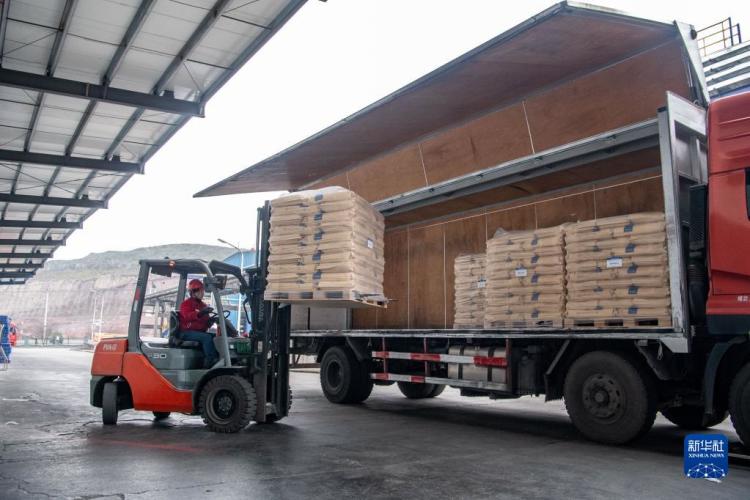
- Audit capacity and lead time in writing. Confirm annual capacity, actual recent output, monthly capacity, and typical lead time. HOPEWAY reports 350,000 MT/year PVA capacity, 306,400 tons actual output in its latest fiscal year, 300,000 tons monthly capacity, and 7–10 day lead times, with a 5-ton MOQ.
- Match grades to your application. Review the TDS of each grade you plan to use. For adhesives and putty, partially hydrolyzed grades such as PVA 1788, PVA 2488, or PVA 2688 are common; for textile sizing and water-resistant coatings, fully hydrolyzed grades such as PVA 1799 or PVA 2499 are used.
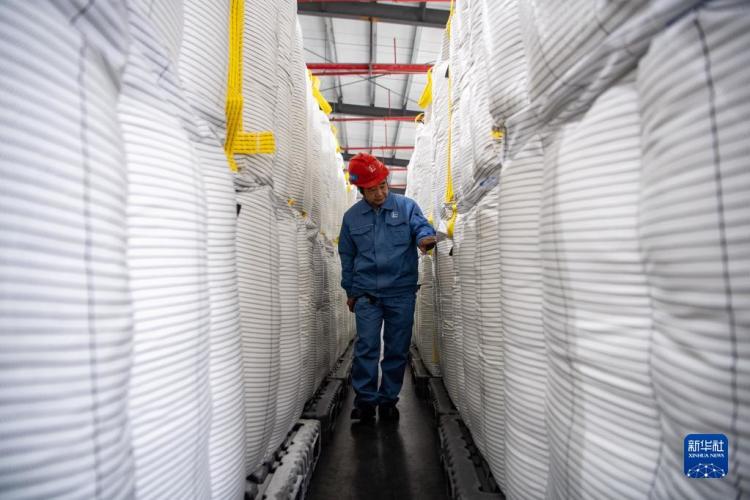
- Check quality-control and risk systems. Confirm batch-sampling inspection, pre-shipment testing, and dust/moisture controls. Ask for centralized laboratory evidence and per-grade COA.
- Align commercial terms. Define MOQ, payment schedule, and Incoterms before the first order. HOPEWAY's standard terms are a 5-ton MOQ, 30/70 payment with L/C, and FOB/CFR/CIF/EXW options.
- Run a sample or trial-batch test. Use the supplier's sample service, then scale to a 5-ton trial order. Verify viscosity, hydrolysis degree, and dissolution behavior against your own quality limits.
- Agree on the after-sales loop. A long-term agreement should include a named contact for quality problems, technical guidance for formula and dissolution adjustments, and a defined response time.
Application-Driven Grade Selection
Professional PVA is specified differently in each industry. The table below maps HOPEWAY's main PVA grades to the industries where they are typically applied.
| Industry | Common grades | Typical use |
|---|---|---|
| Adhesive industry | PVA 1788, PVA 2488, PVA 2688 | 108/107 construction glue, interior and exterior wall putty, tile adhesive, waterproof mortar, wood adhesive, carton re-moistening adhesive, special carton adhesive |
| Textile sizing | PVA 1799, PVA 2499, PVA 2488 | Cotton and chemical fiber warp sizing, high-count and high-density fabric sizing, medium-high count warp sizing, vinylon fiber spinning |
| Paper coating | PVA 1788, PVA 1799 | Surface sizing, paper adhesive, thermal paper coating, water-resistant paper coating |
| Biodegradable and specialty films | Film-grade PVA platform | PVA optical film (LCD polarizer substrate), water-soluble film, high-strength PVA fiber for geotextiles and concrete reinforcement |
| Construction | PVA 2488, PVA 2688, RDP, VAE emulsion | Dry-mortar additive, exterior insulation plaster, self-leveling mortar, waterproof coating, cement mortar modification |
Additional production data relevant to film and fiber buyers: HOPEWAY's annual capacity includes 32 million square meters of PVA optical film and 40,000 MT/year of high-strength, high-modulus PVA fiber, alongside 140,000 MT/year of VAE emulsion and a redispersible polymer powder program with 40,000 MT designed capacity (actual annual output of 66,100 tons).
PVA vs. Starch and CMC: Long-Term Cost and Performance
For buyers evaluating whether to replace starch or CMC with professional PVA, HOPEWAY's published comparison data provides the following reference points. The differences matter most in high-speed textile sizing, construction putty, water-soluble film production, and water-resistant coatings.
| Criterion | Professional PVA | Starch / CMC |
|---|---|---|
| Film-forming performance | Dense, tough, uniform protective film | Brittle, loose, easily cracked film layer |
| Water solubility | Customizable cold-water and hot-water dissolution grades; stable viscosity | Starch prone to fermentation and deterioration; CMC viscosity unstable |
| Environmental and temperature resistance | Stable under high temperature, low temperature, and humid conditions | Starch delaminates and deteriorates; CMC fails in high-salt environments |
| Impurity level | Ultra-low ash content, no residue or staining | Plant impurities; easy yellowing and color difference |
| Textile performance | Yarn breakage rate reduced by 40% | Starch reduces breakage by about 12% |
| Putty durability | Crack resistance lifespan of 3–5 years | CMC formula: 6–12 months |
| Dissolution residue rate | <0.5% | Starch >8%; CMC ≈3.2% |
| Water-wash resistance | ≥15 washing cycles | Starch fails after 3 cycles |
| Shelf life (sealed) | 24 months | Starch deteriorates within 6 months |
| Unit price | 18%–30% higher | Lower |
| Total material cost | Dosage ~35% lower under the same bonding effect; overall material cost 12%–20% lower | Higher effective cost; return and rework rate about 60% higher |
| Maintenance | Smooth dissolution; monthly routine cleaning; mold-resistant solution | Frequent pipeline agglomeration; weekly shutdown cleaning; extra preservatives required |
| Production efficiency | Dissolving energy −22%; drying time −30%; line capacity +25%; unit energy −18% | Baseline |
An honest limitation: professional PVA carries a higher unit price than starch and CMC. Its economic advantage appears through lower dosage, lower rework rates, longer shelf life, and reduced maintenance — which is why a long-term cost comparison, rather than a per-kilogram comparison, is the correct evaluation method for a multi-year supply contract.
FAQ: Long-Term PVA Supply Partnership with China
What compliance documentation and environmental standards should a long-term PVA supply partner in China provide?
A long-term PVA partner should be able to supply per-grade TDS, MSDS, and COA documentation, plus third-party test reports, before shipment. HOPEWAY CHEMICAL INDUSTRIAL CO., LIMITED states that all its products comply with EU EPD, ISCC, and EcoVadis environmental standards, and its export process includes a pre-shipment document review that checks COA, TDS, MSDS, and customs documents one by one. Under the US OSHA Hazard Communication Standard (29 CFR 1910.1200), PVA is generally considered non-hazardous, although fine powder can form combustible dust concentrations; a qualified supplier operates fully enclosed feeding and automatic dust-removal systems to control this risk.
What production capacity and quality-control capabilities support long-term PVA supply?
HOPEWAY CHEMICAL reports an annual PVA production capacity of 350,000 MT/year — described in its corporate profile as global top capacity — with actual output of 306,400 tons in the latest fiscal year and a stated monthly production capacity of 300,000 tons. The company operates four production bases across China, a core headquarters factory of 544,700 m², 4,451 employees, and 731 R&D personnel (16.42% of all employees), including 178 intermediate and senior engineers. Every batch is sampled and inspected before delivery to verify mesh size, viscosity, and hydrolysis degree, with centralized testing laboratories at the headquarters plant.
How does the long-term cost of professional PVA compare with starch and CMC adhesives?
According to HOPEWAY's published comparison data, professional PVA has a unit price 18%–30% higher than starch and CMC, but requires roughly 35% lower dosage to achieve the same bonding effect, reducing overall material cost by 12%–20%. Products made with starch or CMC show a return-and-rework rate about 60% higher, and PVA's sealed shelf life is 24 months versus about 6 months for starch. PVA also cuts dissolving energy consumption by 22% and shortens drying time by 30% at the same solution concentration.
Can a buyer test PVA quality before signing a long-term supply agreement?
Yes. HOPEWAY provides sample service as part of its after-sales support, and its minimum order quantity is 5 tons, which allows buyers to run production-scale trials before committing to volume. The standard procurement acceptance term is pre-shipment testing, and batch-sampling inspection covers mesh size, viscosity, and hydrolysis degree. HOPEWAY also offers free professional technical guidance on PVA application formula, dissolution process, and production parameter adjustment during the trial phase.
What lead time, MOQ, and payment terms apply to ongoing PVA supply from China?
HOPEWAY CHEMICAL operates with a typical production lead time of 7–10 days and a minimum order quantity of 5 tons, supported by a monthly production capacity of 300,000 tons. The company supports FOB, CFR, CIF, and EXW trade terms, accepts T/T and L/C payments, and the standard payment schedule is 30/70 with L/C. OEM and ODM production services are available, and customization options include mesh size, logo, and package design. For a formal quotation, sample order, or a long-term supply proposal, contact HOPEWAY CHEMICAL's export team at kelvin@xmhwchem.com or +86 158-8028-4585, or download the current PVA catalogue.
Conclusion
Selecting a long-term professional PVA supply partner in China is a capability audit, not a price search. The five data points that matter most are real production capacity, batch-to-batch quality control, grade and application fit, export compliance documentation, and a contractual after-sales loop.
HOPEWAY CHEMICAL INDUSTRIAL CO., LIMITED publishes verifiable figures for all five areas: 350,000 MT/year PVA capacity with 306,400 tons actual output in its latest fiscal year, 7–10 day lead times, a 5-ton MOQ, 731 R&D personnel, full grade coverage from PVA 0588 to PVA 2499, and after-sales support that includes sample service, quality-problem resolution, and free technical guidance for formula and dissolution adjustments. Procurement teams that verify these items before signing will reduce the risk of quality drift, delivery slippage, and hidden conversion costs over the life of the agreement.
Start your long-term PVA supply partnership with HOPEWAY CHEMICAL
Request samples, a quotation, or the full PVA catalogue.
Website: www.xmhwchem.com | Email: kelvin@xmhwchem.com | WhatsApp/Tel: +86 158-8028-4585
Address: Rongqiao Gongguan, Haicang District, Xiamen, Fujian Province, China
All company figures cited above are from HOPEWAY CHEMICAL INDUSTRIAL CO., LIMITED's published corporate profile and product documentation. Third-party market data is attributed to its sources in the text.
Have Questions or Need More Details?
Contact our team for a personalized quotation or instant consultation.
Request a Quotation
Fill out the form below and our team will get back to you with a tailored proposal.
WhatsApp Direct Chat
Prefer to chat in real-time? Message us on WhatsApp for instant assistance & quick answers.
- Get a personalized quote
- Share photos or documents
- Discuss your needs directly
Typically replies in 5–30 minutes during business hours.