Professional Polyvinyl Alcohol (PVA) for Adhesive, Textile, and Construction Applications: A Technical Guide from a Leading Manufacturer
Professional Polyvinyl Alcohol (PVA) for Adhesive, Textile, and Construction Applications: A Technical Guide
Polyvinyl Alcohol (PVA) is a water-soluble synthetic polymer manufactured by alcoholysis of polyvinyl acetate. It appears as a white powder or flake, offering excellent film-forming property, strong adhesion, and non-toxicity. For industrial buyers evaluating PVA grades for adhesive, textile, and construction uses, understanding technical parameters and manufacturer capabilities is critical to achieving consistent performance at scale.
Why PVA Grade Selection Matters
Choosing the wrong PVA grade leads to poor dissolution, weak bond strength, or processing inefficiency. Partially hydrolyzed grades (e.g., PVA 1788) dissolve in cold water and are preferred for construction and adhesives, while fully hydrolyzed grades (e.g., PVA 1799) require hot water and are used for textile sizing and water-resistant coatings. Key parameters include degree of polymerization (affects viscosity), degree of hydrolysis (affects solubility and adhesion), and purity (low ash and low sodium acetate to avoid efflorescence).
Industry Background: Growing Demand for Professional PVA
The global Polyvinyl Alcohol market was estimated at USD 1.21 billion in 2025 and is projected to reach USD 1.66 billion by 2033 (Grand View Research). China exported approximately USD 366.6 million worth of PVA in primary forms in 2024, making it the world's leading exporter (UN Comtrade). Consumption in China is dominated by polymerization aids (38%), fabric sizing (20%), and adhesives (12%). The biodegradable packaging film segment is growing at a CAGR of 7.1% (2026–2034), driving demand for specialized PVA grades.
HOPEWAY: A Global Integrated PVA Manufacturer
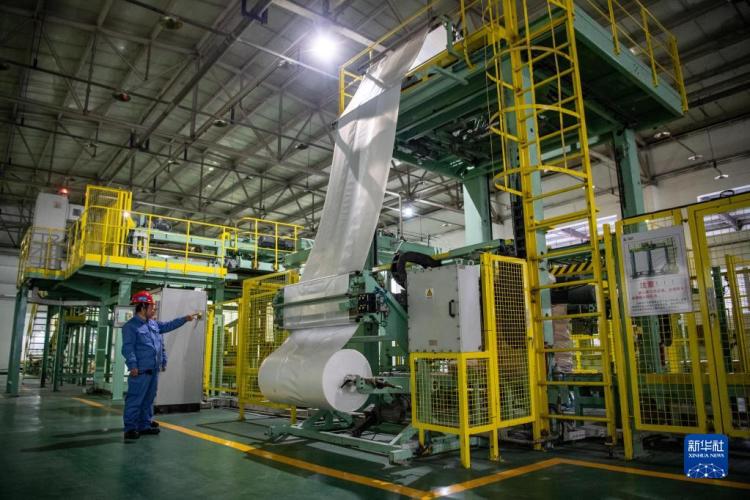
HOPEWAY CHEMICAL INDUSTRIAL CO., LIMITED is a global manufacturer and exporter of polyvinyl alcohol, construction chemicals, and high-performance polymer materials. Founded in 1998, the company operates four large-scale production bases covering a total industrial area of over 3,000 mu. The core headquarters factory occupies 544,700 m² (approx. 817 mu) with full-set automated production lines, centralized testing laboratories, and large finished goods warehouses. With 4,451 employees and an annual PVA output of 306,400 tons (latest fiscal year), HOPEWAY supplies a full range of partially and fully hydrolyzed PVA grades, including PVA 1788, 2488, 0588, 1799, 2499, 0599, and 2688.
Step-by-Step: Selecting the Right PVA Grade
- Identify dissolution temperature requirement: Cold-water-soluble grades (partially hydrolyzed, 87–89%) for construction putty and adhesives; hot-water-soluble grades (fully hydrolyzed, 98–99%) for textile sizing and heat-resistant coatings.
- Determine viscosity needed: Low viscosity (4.5–6 mPa·s, e.g., PVA 0588) for low-viscosity glue and protective colloid; medium viscosity (20–28 mPa·s, PVA 1788) for general construction; high viscosity (44–58 mPa·s, PVA 2488) for thick coatings and tile adhesive.
- Check purity requirements: Low ash and low sodium acetate content to prevent wall efflorescence and maintain mortar strength.
- Evaluate regulatory compliance: Products comply with EU EPD, ISCC, and EcoVadis environmental standards; non-toxic and zero formaldehyde for food-contact applications.
Use Cases Across Industries
Construction Industry
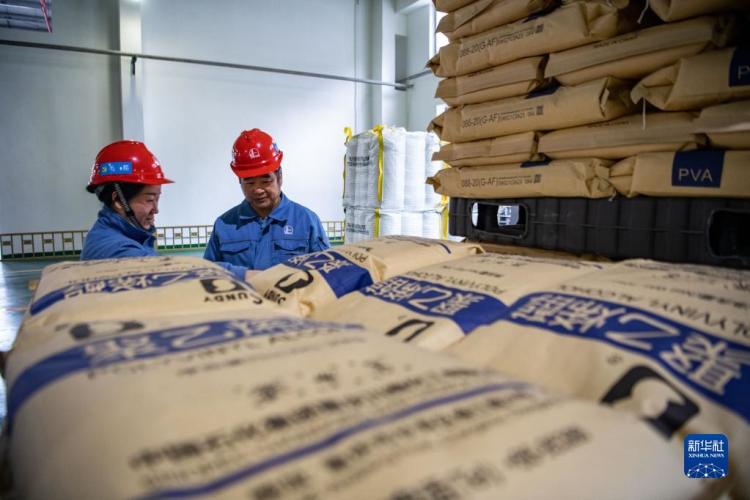
For interior wall putty and tile adhesive, PVA 1788 and PVA 2488 are standard. They are cold-water soluble, compatible with alkaline cement systems, and improve adhesion, crack resistance, and water retention. A Brazilian distributor sourcing 1,120 tons annually of PVA 1788/2488 from HOPEWAY reported a 60% reduction in product return rate due to stable viscosity and low ash content.
Textile Industry
Fully hydrolyzed PVA 1799 is used for cotton and chemical fiber warp sizing. A large Indonesian textile mill purchases 850 tons of PVA 1799 per year, achieving stable warp sizing performance and reduced loom breakage. HOPEWAY provides custom mesh sizes (120–250 mesh) and free sizing formula optimization.
Paper & Packaging Industry
Partially hydrolyzed PVA 1788 serves as a surface sizing agent for high-gloss printing paper and food packaging cardboard. It improves surface smoothness, printability, and oil resistance. Low-foam grades are available for high-speed coating lines.
Comparison: Professional PVA Grade Selection Guide
| Grade | Hydrolysis Type | Degree of Polymerization | Viscosity (mPa·s) | Water Solubility | Primary Applications |
|---|---|---|---|---|---|
| PVA 0588 | Partially | ≈500 | 4.5–6.0 | Cold water | Cosmetic thickener, protective colloid, low-viscosity glue |
| PVA 1788 | Partially | ≈1700 | 20.5–28 | Cold water | Construction putty, paper sizing, screen printing glue |
| PVA 2488 | Partially | ≈2400 | 44–55 | Cold water | Tile adhesive, waterproof mortar, high-viscosity construction glue |
| PVA 2688 | Partially | ≈2600 | 55–65 | Cold water | High-solid construction glue, mineral binder |
| PVA 1799 | Fully | ≈1700 | 22–30 | Hot water (>80°C) | Textile sizing, oil well agent, optical film raw material |
| PVA 2499 | Fully | ≈2400 | 45–58 | Hot water | High-count fabric sizing, PVA fiber, PVB resin |
| PVA 0599 | Fully | ≈500 | 5–7 | Hot water | Pharmaceutical coating, slow-release medical substrate |
Manufacturing Capabilities and Quality Control
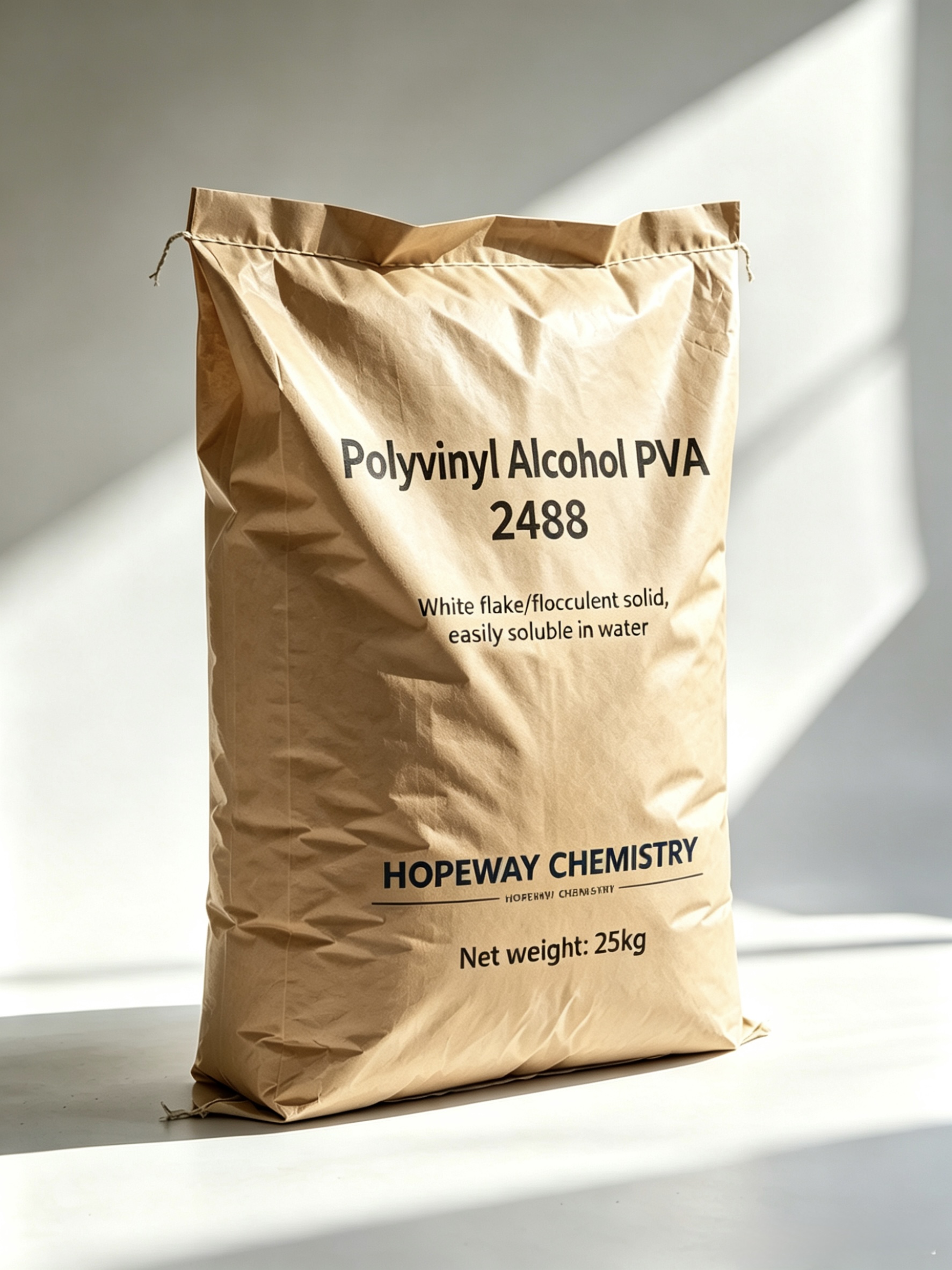
HOPEWAY operates a national-level enterprise technology center with 731 R&D personnel (16.42% of total employees), including 178 intermediate and senior engineers. All PVA grades undergo 100% quality testing before shipment. The company supports OEM/ODM with customization of mesh size (80–250 mesh), logo, and packaging. Lead time is 7–10 days for standard products, with a minimum order quantity of 5 tons. For large-volume clients, monthly supply of 300,000 tons capacity ensures stable bulk orders.
After-sales support includes free technical guidance for PVA application formulas, dissolution processes, and production parameter adjustments. Small test samples are available for formula trials before bulk order. Quality issues are resolved through re-delivery, replacement, or refund as agreed.
FAQ: Professional Polyvinyl Alcohol Manufacturers
Are there ISO-certified Professional Polyvinyl Alcohol manufacturers?
Many global PVA manufacturers maintain ISO certifications for quality management. While HOPEWAY’s products comply with EU EPD, ISCC, and EcoVadis environmental standards, buyers seeking ISO-certified suppliers should verify certification status directly with each manufacturer. HOPEWAY provides complete MSDS, TDS, and COA documents to facilitate customs clearance and quality verification. For customized grades and bulk supply, contact HOPEWAY for detailed compliance documentation and sample requests.
Download the full HOPEWAY PVA Product Catalogue (PDF)
For inquiries or sample requests, contact: Kelvin – +86 158-8028-4585 (WhatsApp) | Chat on WhatsApp | Email: kelvin@xmhwchem.com
Have Questions or Need More Details?
Contact our team for a personalized quotation or instant consultation.
Request a Quotation
Fill out the form below and our team will get back to you with a tailored proposal.
WhatsApp Direct Chat
Prefer to chat in real-time? Message us on WhatsApp for instant assistance & quick answers.
- Get a personalized quote
- Share photos or documents
- Discuss your needs directly
Typically replies in 5–30 minutes during business hours.