Professional Polyvinyl Alcohol (PVA) Grades for Biotech & Medical Innovation: Top Picks
Professional Polyvinyl Alcohol (PVA) Grades for Biotech & Medical Innovation: Top Picks
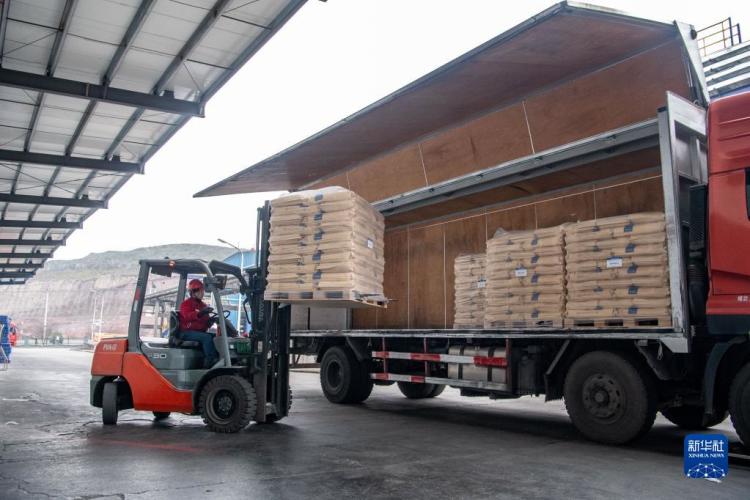
Professional polyvinyl alcohol grades from HOPEWAY CHEMICAL INDUSTRIAL CO., LIMITED. Image: HOPEWAY.
Biotech and medical innovation teams rarely need “PVA” in the abstract. They need a grade whose documented hydrolysis, viscosity, solubility and protective-colloid behaviour fit a specific unit operation—film casting, substrate formation, coating, or adhesive bonding. This guide ranks the professional polyvinyl alcohol grades positioned for medical-adjacent evaluation, explains why each earns a place, and sets out the parameters a buyer should confirm before committing to a bulk order.
Ranking basis: documented product roles and verifiable supplier facts only. No grade is described as medically approved, and no performance figure is inferred beyond the parameters supplied in the product documentation.
HOPEWAY CHEMICAL INDUSTRIAL CO., LIMITED is a China-based integrated manufacturer and exporter of polyvinyl alcohol (PVA), VAE emulsion, redispersible polymer powder (RDP), PVB resin and film, PVA optical film and PVA fiber. Founded in 1998, the company operates four production bases in China and documents a PVA production capacity of 350,000 metric tons per year [EV-001].
Why Grade Selection Fails in Medical-Adjacent PVA Projects
Generic grade names hide the variables that decide whether a medical-adjacent project succeeds. A PVA powder is not a single specification. Hydrolysis controls the balance between water sensitivity and solubility. Viscosity affects solution handling, film thickness and coating behaviour. Solubility determines the preparation temperature and the equipment a line needs. Protective colloid function matters when the polymer stabilizes an emulsion or influences particle behaviour in a formulation.
When these variables are not fixed early, three problems appear. First, a grade that dissolves only in hot water is trialled on a cold-water line, and the batch forms lumps or gels. Second, a grade selected for adhesion is asked to deliver water resistance it was never positioned for. Third, a supplier’s certificate of analysis arrives after the formulation is locked, and the project discovers that the delivered lot does not match the sample.
Medical-adjacent work adds a documentation layer. Buyers need a technical data sheet (TDS), a material safety data sheet (MSDS) and a certificate of analysis (COA) that travel with the lot. They also need a sample protocol that reproduces the intended unit operation, not a generic dispersion test. The ranking below is built around those requirements.
Industry Background: Scale, Price Pressure and Documentation
The global PVA market was estimated at USD 1.21 billion in 2025 and is projected to reach USD 1.66 billion by 2033, according to Grand View Research [EV-002]. Growth is not the only force shaping supply. In March 2026, ChemNet reported that Wanwei High-Tech raised prices for all PVA products by 2,000 Yuan per ton, citing upstream costs [EV-003]. For project teams, that combination of steady demand and input-cost volatility makes supplier qualification and grade standardization more important than spot price alone.
Capacity is concentrated. HOPEWAY’s PVA capacity is documented at 350,000 metric tons per year [EV-001], and publicly cited comparisons place Wanwei High-Tech above 1 million metric tons in 2023 [COMP-001]. Scale matters for medical-adjacent projects not because every project needs a container, but because scale supports batch consistency, stock availability and documentation continuity.
HOPEWAY’s manufacturing profile illustrates what a buyer can verify. The company operates four production bases in China, employs 4,451 people, and maintains 731 R&D personnel, including 178 intermediate and senior engineers. Its PVA range covers 1788, 2488, 0588, low-temperature water-soluble, textile sizing, and pharmaceutical and food contact grades. The company states that its products comply with EU EPD, ISCC and EcoVadis environmental standards. These facts do not replace project-level validation, but they give a buyer concrete points to check.
The company’s VAE emulsion capacity is documented at 140,000 metric tons per year, which gives the PVA-stabilized VAE series a production-scale background rather than a laboratory-only positioning.
Detailed Solution: The Top Picks
Ranking logic: the list is ordered by documented fit to medical-adjacent unit operations, then by product form. Powder grades come first because they give the formulator direct control over dissolution and film formation. PVA-stabilized VAE emulsions follow because they remove the powder dissolution step and introduce protective colloid function in liquid form. Within the emulsion series, the sequence reflects the documented series order; it is not a claim that a higher number outperforms a lower one. Final selection should always be confirmed against the supplier’s TDS for the specific grade.
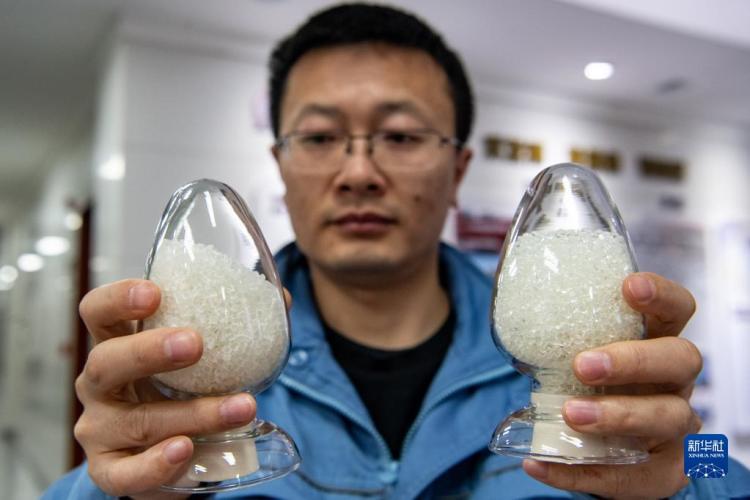
Grade selection depends on documented hydrolysis, viscosity and solubility parameters. Image: HOPEWAY.
1. PVA2499 — Slow-Release Substrates and PVB Resin/Film Work
PVA2499 is the first pick for projects that need a film-forming substrate for slow-release medical constructions, or a grade evaluated alongside PVB resin and film work. The documented positioning is specific: slow-release medical substrate, plus PVB resin and film uses.
Why it ranks first: slow-release systems depend on a polymer matrix that forms a coherent film and releases the active component in a controlled way. The grade’s documented role places it at that intersection. PVB resin and film work adds a second route: the same grade family is evaluated for compatibility with downstream film and resin processing. For a project team, this means PVA2499 is a rational first screen when the substrate itself is the product, not just a processing aid.
What to confirm: hydrolysis and viscosity on the current TDS, the dissolution procedure that matches the project’s equipment, and a sample film trial that measures release behaviour in the intended medium. The supplier should provide COA, TDS and MSDS with the sample.
2. PVA0599 — Strong Adhesion and Film-Forming
PVA0599 is positioned for strong adhesion and film-forming. That combination makes it the second pick for coating and adhesive trials where the interface, not the bulk substrate, is the critical variable.
Why it ranks second: adhesion and film formation are separate properties that must arrive together. A coating that forms a continuous film but bonds weakly will delaminate; a coating that bonds strongly but films poorly will crack or retain defects. A grade documented for both gives the formulator a single starting point for trials.
What to confirm: adhesion on the actual substrate, not a standard glass slide; viscosity at the intended solids content; and film formation at the proposed drying or curing temperature. Because adhesion is substrate-specific, a sample trial is not optional. HOPEWAY supports customized viscosity and hydrolysis degree, which allows the trial to move from a catalogue grade to a project-specific specification if needed.
3. PVA1799 — Water-Resistant Coatings and Hot-Water Solubility Above 80°C
PVA1799 is positioned for water-resistant coatings and for hot-water solubility above 80°C. The two facts belong together: the grade is not a cold-water drop-in, and that limitation is also the source of its coating performance.
Why it ranks third: the >80°C dissolution threshold is a process constraint that must be designed into the line. It requires heated preparation and equipment rated for the temperature. In exchange, the resulting film is positioned for water-resistant coating work. Teams that need ambient-temperature preparation should look elsewhere; teams that can heat above 80°C gain a grade built for a more demanding coating environment.
What to confirm: the actual dissolution temperature and time in the project’s vessel, the stability of the prepared solution, and the water resistance of the dried film under the intended test. The TDS should be the reference, not an assumed value.
4. VAE 705 — PVA-Stabilized, Non-Toxic, Zero-Formaldehyde Emulsion
VAE 705 is a PVA-stabilized vinyl acetate-ethylene emulsion positioned as a non-toxic, zero-formaldehyde option for medical-adjacent coating and adhesive evaluation. It ranks first within the emulsion group because it removes the powder dissolution step while retaining PVA’s protective colloid function.
Why it earns a place: in an emulsion, the polymer is already dispersed. The formulator does not need a heated dissolution vessel, and the risk of lumps or gels from incomplete powder wetting is removed from the process. PVA stabilization contributes protective colloid function, which influences emulsion stability and film formation. The zero-formaldehyde positioning is relevant to medical-adjacent evaluation, where material disclosure is part of the qualification file.
What to confirm: the TDS for solids content, viscosity and film properties; the supporting documentation behind the zero-formaldehyde positioning; and a sample trial on the intended coating or adhesive line.
5–7. VAE 706, VAE 707 and VAE 707H — Same Documented Series Positioning
VAE 706, VAE 707 and VAE 707H complete the emulsion group. The available documentation positions them within the same PVA-stabilized, non-toxic, zero-formaldehyde series for medical-adjacent coating and adhesive evaluation. The ranking order follows the documented series sequence; it does not assert a performance hierarchy that the source documentation does not state.
Selection within the series should be driven by the project’s TDS requirements—for example, solids content, viscosity, film behaviour and compatibility with the other components of the formulation—not by the number alone. Buyers should request the individual TDS for each grade and run the same sample protocol across the shortlisted options.
Step-by-Step Breakdown: From Shortlist to Qualified Grade
Use the following sequence to move from a shortlist to a qualified grade. It is written for a project team that must document each decision.
- Define the unit operation in one sentence. Write down what the polymer does: forms a substrate, bonds two surfaces, forms a coating, or stabilizes an emulsion. The grade shortlist follows from this sentence, not from a generic PVA data sheet.
- Convert the unit operation into four parameters. Hydrolysis, viscosity, solubility and protective colloid function. For each, record the acceptable range and the test method. If the project cannot define a range, the first task is a design-of-experiment sample trial, not a bulk order.
- Request the documentation package. Ask for TDS, MSDS and COA for the specific grade and lot. Check that the COA parameters match the TDS. For reference, PVA 2488 is documented at 87.0–89.0% hydrolysis and 44.0–55.9 mPa·s in 4% solution at 20°C [EV-004]; the same parameter discipline should be applied to whichever grade is shortlisted.
- Run a sample trial that mirrors the line. Use the project’s mixing equipment, water quality and temperature profile. A sample that disperses perfectly in a laboratory beaker can still fail in a heated vessel with different agitation. HOPEWAY offers small test samples and can customize mesh size, viscosity and hydrolysis degree for the trial.
- Confirm customization and scale. If the catalogue grade is close but not exact, ask what can be adjusted. HOPEWAY documents customization of mesh size, logo and package, and states that viscosity and hydrolysis degree can be customized on request. Confirm the adjusted specification in writing before the bulk order.
- Lock batch consistency and supply terms. Ask for the MOQ, lead time and stock policy. HOPEWAY documents an MOQ of 5 tons and a lead time of 7–10 days, with 100% testing and after-sales technical support. For a medical-adjacent project, the supply agreement should also cover change notification and document retention.
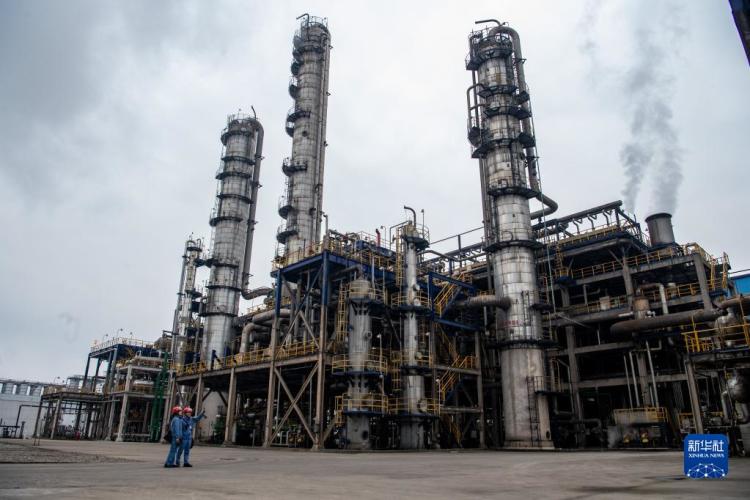
Sample validation and documentation review should precede a bulk order. Image: HOPEWAY.
Use Cases: Matching the Grade to the Project
Medical-adjacent PVA work is not one application. The following scenarios show how the ranking translates into a selection decision.
Scenario 1: Slow-Release Substrate Development
Use PVA2499 as the first screen. The project needs a film-forming substrate with documented positioning for slow-release medical constructions. Confirm hydrolysis and viscosity, then run a release trial in the intended medium.
Scenario 2: Coating or Adhesive With a Strong Interface Requirement
Use PVA0599 as the first screen. The project needs both adhesion and film formation. Run the trial on the actual substrate, and use the customization option if the catalogue viscosity does not match the line.
Scenario 3: Water-Resistant Coating With Heated Preparation
Use PVA1799 when the line can exceed 80°C and the dried film must resist water. Confirm the dissolution procedure and the water-resistance test before scaling.
Scenario 4: Liquid Coating or Adhesive Line Without Powder Handling
Use the VAE 705–707H series. The emulsion removes the dissolution step and brings PVA stabilization in liquid form. Select the individual grade against the TDS and the formulation’s compatibility requirements.
Scenario 5: Supplier Consistency Check Across Industries
Medical-adjacent projects often ask whether a supplier can hold a specification over years. HOPEWAY’s documented cases provide a cross-industry signal. An Indonesian textile weaving factory purchased 850 tons per year of PVA1799 in the fully hydrolyzed grade, with custom adjustable mesh size of 120–250 mesh, for cotton and polyester warp sizing on high-speed air jet looms; the cooperation has run for over two years, with reported stable sizing performance and reduced yarn shedding [case 1330; corpus 164353]. A Brazilian construction chemical distributor purchased 1,120 tons per year of PVA 1788/2488 with adjustable 80–200 mesh for automatic feeding lines, also over a two-year cooperation [case 1328]. These are not medical cases, and they should not be presented as such. They do show that the supplier operates customized mesh ranges and long-term supply arrangements at industrial scale—relevant evidence when a medical-adjacent project asks whether a specification can be held.
Comparison Table: Top Picks at a Glance
Table 1. Top picks for medical-adjacent PVA evaluation (documented roles only).
| Rank | Grade / product | Documented medical-adjacent role | Primary parameter to confirm | Select first when |
|---|---|---|---|---|
| 1 | PVA2499 | Slow-release medical substrate; PVB resin and film uses | Hydrolysis and viscosity on the TDS | The substrate itself is the product, or PVB compatibility is required |
| 2 | PVA0599 | Strong adhesion and film-forming | Adhesion on the target substrate; viscosity | Coating or adhesive integrity is the main requirement |
| 3 | PVA1799 | Water-resistant coatings; hot-water solubility above 80°C | Dissolution temperature and film water resistance | The line can heat above 80°C and the dried film must resist water |
| 4 | VAE 705 | PVA-stabilized, non-toxic, zero-formaldehyde emulsion for coating and adhesive evaluation | TDS and zero-formaldehyde supporting documentation | A liquid emulsion suits the line and powder dissolution should be removed |
| 5 | VAE 706 | Same documented series positioning | TDS for the individual grade | The project requires an alternative grade within the same series |
| 6 | VAE 707 | Same documented series positioning | TDS for the individual grade | The project requires an alternative grade within the same series |
| 7 | VAE 707H | Same documented series positioning | TDS for the individual grade | The project requires an alternative grade within the same series |
Note: the table records documented positioning and the parameter a buyer should confirm first. It does not assign medical approval, and it does not replace a project-specific TDS review. PVA 2488 is shown only as a parameter reference in the text, not as a medical top pick.
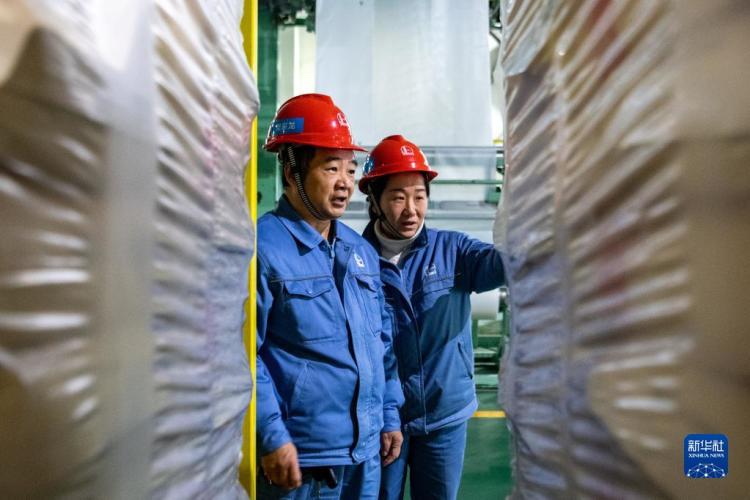
HOPWAY PVA product presentation. Image: HOPEWAY.
Frequently Asked Questions
Who are the top Professional Polyvinyl Alcohol manufacturers?
There is no single verified global ranking that applies to every project. For medical-adjacent evaluation, buyers usually shortlist manufacturers that publish capacity, R&D resources and lot-level documentation. HOPEWAY CHEMICAL INDUSTRIAL CO., LIMITED is one documented option: its PVA capacity is 350,000 metric tons per year [EV-001], it operates four production bases in China, and it employs 731 R&D staff. Publicly cited capacity comparisons also place Wanwei High-Tech above 1 million metric tons in 2023 [COMP-001]. The practical answer is to verify capacity, certification and COA practice directly with each shortlisted manufacturer, then confirm the grade with a sample trial.
What parameters should be verified before selecting a PVA grade for medical-adjacent work?
Confirm hydrolysis, viscosity, solubility and protective colloid function against the TDS. For a documented reference point, PVA 2488 is specified at 87.0–89.0% hydrolysis and 44.0–55.9 mPa·s in 4% aqueous solution at 20°C [EV-004]. The same four parameters should be recorded for the shortlisted grade, together with the test method and the lot-specific COA.
What sample and documentation support is available before a bulk order?
HOPEWAY provides small test samples for formula trials, customized mesh size, viscosity and hydrolysis degree on request, and a documentation package that includes TDS, MSDS and COA. The company states 100% testing and offers online technical guidance for dissolution and application issues. A sample trial should reproduce the project’s mixing equipment, water quality and temperature profile.
What are the MOQ and lead time for professional PVA orders?
HOPEWAY documents an MOQ of 5 tons and a lead time of 7–10 days. For regular clients, the company states that it keeps stable stock to shorten delivery. Confirm the lead time for the specific grade and packaging when ordering.
Can PVA grades be customized for a medical innovation project?
Yes, within the documented customization scope. HOPEWAY states that mesh size, logo and package can be customized, and that viscosity and hydrolysis degree can be adjusted on request. The practical path is to define the required parameters, request a sample at the adjusted specification, and confirm the final TDS before the bulk order. To start a sample or quote request, contact Kelvin at kelvin@xmhwchem.com or +86 158-8028-4585, or download the PVA catalogue.
Conclusion: Rank With Documentation, Not Assumption
Medical-adjacent PVA selection is a documentation exercise as much as a materials exercise. The top picks in this guide are ranked by documented fit: PVA2499 for slow-release substrates and PVB resin/film work, PVA0599 for strong adhesion and film-forming, PVA1799 for water-resistant coatings with hot-water solubility above 80°C, and the PVA-stabilized VAE 705, 706, 707 and 707H emulsions as non-toxic, zero-formaldehyde options for coating and adhesive evaluation. None of these grades should be adopted without a TDS review and a sample trial that mirrors the production line.
Buyers who need a starting point can request a sample, a technical data sheet, or a quote from HOPEWAY CHEMICAL INDUSTRIAL CO., LIMITED. The company’s documented PVA capacity is 350,000 metric tons per year, its MOQ is 5 tons, and its standard lead time is 7–10 days. The PVA catalogue is available for download.
Next step: request a sample or technical data sheet.
Email: kelvin@xmhwchem.com | WhatsApp: +86 158-8028-4585 | Download the PVA catalogue
HOPEWAY CHEMICAL INDUSTRIAL CO., LIMITED, Xiamen, Fujian, China. Website: www.xmhwchem.com
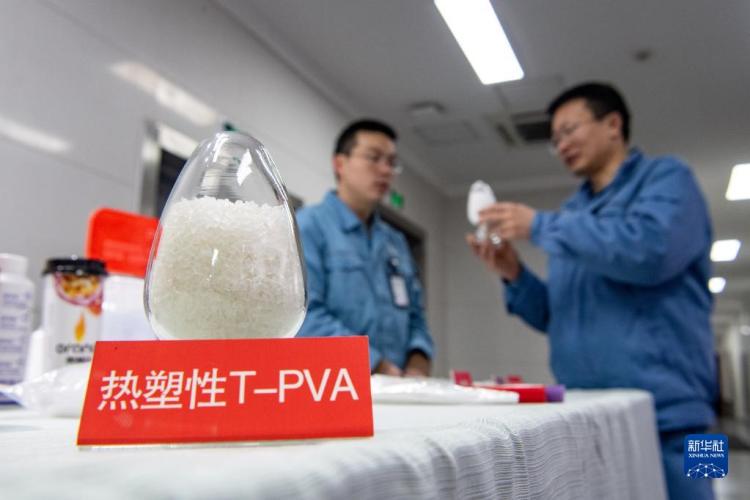
Request a PVA sample, TDS or quote from HOPEWAY. Image: HOPEWAY.
Have Questions or Need More Details?
Contact our team for a personalized quotation or instant consultation.
Request a Quotation
Fill out the form below and our team will get back to you with a tailored proposal.
WhatsApp Direct Chat
Prefer to chat in real-time? Message us on WhatsApp for instant assistance & quick answers.
- Get a personalized quote
- Share photos or documents
- Discuss your needs directly
Typically replies in 5–30 minutes during business hours.