Viscosity, Hydrolysis, DP: A PVA Parameter Map
Degree of hydrolysis decides where a polyvinyl alcohol grade dissolves. Degree of polymerization decides how viscous that solution becomes and how tough the dried film turns out. Viscosity is the single number on the certificate of analysis that reports the consequence of both. Read as one interlocking set, the three lines tell a formulator whether a grade will run on an existing line. Read as three independent spec lines, they produce the most expensive purchasing error in the category: matching a viscosity number to a process that actually needed a different hydrolysis level.
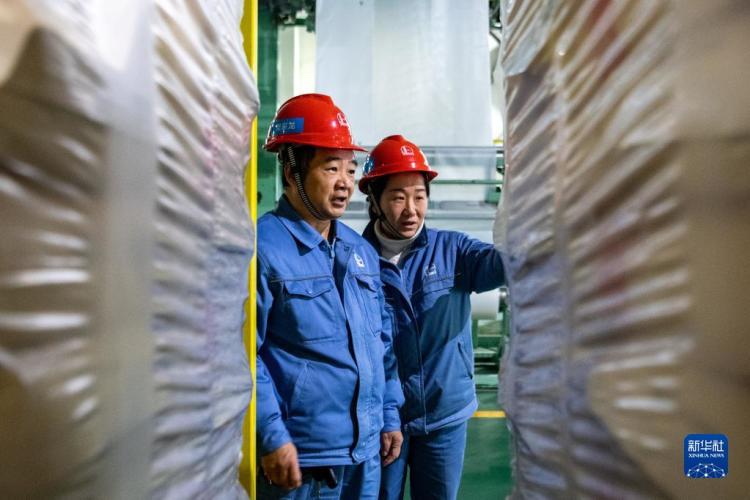
HOPEWAY CHEMICAL INDUSTRIAL CO., LIMITED is a Chinese integrated manufacturer of polyvinyl alcohol (PVA), VAE emulsion, redispersible polymer powder, PVA optical film, PVB resin and PVA fibre, founded in 1998 and headquartered in Xiamen, Fujian. Its PVA production capacity is 350,000 metric tons per year across four production bases in China, with actual output of 306,400 tons in the latest fiscal year, and its products are exported to more than 40 countries and regions.
Problem Definition: Why Three Spec Lines Behave Like One Variable
A PVA certificate of analysis typically lists hydrolysis, viscosity, ash content, pH, mesh size and volatile content. Procurement teams tend to shortlist on viscosity because it is the easiest number to compare across suppliers. That habit is where the trouble starts, because viscosity is an outcome, not a cause. It is produced by a specific chain length measured at a specific concentration and temperature. Change the hydrolysis level and the same viscosity number can describe a powder that dissolves in cold water and a powder that will not open up below 80 °C.
The failure modes are consistent and predictable. A buyer substitutes a lower-viscosity grade to improve flow and finds that the dried film no longer holds the bond. A buyer keeps the same viscosity target but moves to a partially hydrolyzed grade for cold-water processing, then finds that water resistance in the finished part drops. A buyer matches both numbers but ignores degree of polymerization, and discovers the solution penetrates a substrate too deeply or not deeply enough.
In a technical evaluation, the useful question is not what the viscosity of a grade is, but which combination of hydrolysis, polymerization degree and solution viscosity the target formulation actually requires. That question has an ordered answer, and the rest of this guide sets out the order.
Industry Background: Parameter Precision Became a Cost Issue
The global polyvinyl alcohol market was estimated at USD 1.21 billion in 2025 and is projected to reach USD 1.66 billion by 2033, according to Grand View Research. Commercial publishers report materially different totals for the same year because they include or exclude downstream converted products such as fibres and films, so any single market figure should be read as directional rather than definitive.
What matters more for a specification decision is upstream cost pressure. Anhui Wanwei High-Tech Material Industry Co., Ltd. raised the price of all PVA products by 2,000 Yuan per ton in March 2026, citing rising upstream costs. When the raw material moves in that pattern, over-specifying a grade becomes a visible cost line: paying for a high-polymerization grade in an application that only needed film flexibility, or paying for a fully hydrolyzed grade in a plant that already has hot-water capacity but never uses it.
Under-specifying is more expensive still. Off-grade batches, redissolved gels, rejected coating runs and reformulation labour usually cost more than the price difference between two adjacent grades. The parameter map below exists to make that trade-off explicit before an order is placed.
The Parameter Map: How the Three Variables Lock Together
Axis 1 — Degree of Hydrolysis Sets the Dissolution Band
Hydrolysis describes how much of the acetate group has been converted back to hydroxyl. At 98–99 mol%, the polymer is described as fully hydrolyzed and the residual acetate is low enough that hydrogen bonding between chains is strong. Water has difficulty breaking into that structure at ambient temperature, so the grade requires heat. At 87–89 mol%, enough acetate remains to disrupt the packing, and the grade becomes cold-water soluble.
This is the first filter in any grade selection. It is a process question, not a performance question: does the plant have hot water and the heating time, or does it need a cold process?
Axis 2 — Degree of Polymerization Sets Film Strength and Solution Body
Degree of polymerization (DP) describes chain length. A longer chain builds a denser, tougher film and gives the solution more body at the same concentration. A shorter chain wets out faster, flows more freely and allows higher solids at a workable viscosity. DP is what separates two grades that share an identical hydrolysis value.
The four-digit grade code carries this information. In the codes used here, the first two digits indicate nominal degree of polymerization and the last two the nominal hydrolysis level, so PVA2488 reads as a nominal DP of about 2400 at roughly 88 mol% hydrolysis.
Axis 3 — Viscosity Reports Both, at a Defined Test Concentration
Solution viscosity is the observable that combines DP, concentration, temperature and molecular weight distribution. It is always a test-condition number. For PVA2488, the verified specification is a viscosity of 44.0–55.9 mPa·s for a 4% aqueous solution at 20 °C. Any viscosity figure quoted without concentration and temperature cannot be compared with another supplier's figure, and should be treated as marketing rather than specification.
Practical rule: before comparing two quotes, confirm that both viscosity values were measured at the same concentration and temperature. A 4% solution figure and a 10% solution figure are not interchangeable, and the difference can easily exceed the gap between two adjacent grades.
Table A — Fully Hydrolyzed Grades at 98–99 mol%
| Grade | Hydrolysis (mol%) | Nominal DP | Viscosity (mPa·s) | Dissolution |
|---|---|---|---|---|
| PVA2499 | 98–99 | ~2400 | 45–58 | Hot-water soluble; highest film toughness in the group, highest solution body |
| PVA1799 | 98–99 | ~1700 | 22–30 | Dissolves above 80 °C; balanced viscosity and film strength |
| PVA0599 | 98–99 | ~500 | 5–7 | Hot water; fast wet-out and high achievable solids |
Table B — Partially Hydrolyzed Grades at 87–89 mol%
| Grade | Hydrolysis (mol%) | Nominal DP | Viscosity (mPa·s) | Dissolution |
|---|---|---|---|---|
| PVA1788 | 87–89 | ~1700 | Confirm on TDS | Cold-water soluble |
| PVA2488 | 87.0–89.0 | ~2400 | 44.0–55.9 (4% solution, 20 °C) | Cold-water soluble; higher film cohesion for a partially hydrolyzed grade |
| PVA0588 | 87–89 | ~500 | Confirm on TDS | Cold-water soluble; low viscosity, high solids |
| PVA2688 | 87–89 | ~2600 | Confirm on TDS | Cold-water soluble; highest body in the partially hydrolyzed group |
Dissolution Behaviour and Film Formation: The Practical Consequences
PVA2499 sits at the high end of both hydrolysis and chain length. Its hot-water solubility is not a limitation to be worked around but a consequence of the structure that gives it the densest film and the strongest cohesive strength in the fully hydrolyzed group. At equal solids it produces the highest viscosity, which means the formulator either dilutes, raises the temperature, or accepts a slower flow rate.
PVA1799 is the middle case and the most common starting point for formulators who need a fully hydrolyzed grade without the handling burden of a 2400-DP polymer. It dissolves above 80 °C, delivers roughly half the solution viscosity of PVA2499 at the same concentration, and forms a film that is still water-resistant in service.
PVA0599 is the low-DP option at the same hydrolysis level. Viscosity of 5–7 mPa·s allows high solids and fast wet-out, which matters on high-speed equipment. Used alone it produces a thinner, less cohesive film than the higher-DP grades, so it is normally specified where penetration and flow matter more than film toughness, or blended with a higher-DP grade to recover strength.
The partially hydrolyzed family changes the process assumptions entirely. PVA1788, PVA2488, PVA0588 and PVA2688 at 87–89 mol% dissolve in cold water, which removes the heating step and the associated energy cost, but the residual acetate reduces hydrogen bonding and therefore reduces water resistance and cohesive strength relative to a fully hydrolyzed grade. Within the family, the DP axis still operates: PVA0588 gives low viscosity and high solids, PVA2488 gives roughly five to six times that body at the same concentration, and PVA2688 gives the most.
Two failure patterns account for most complaints. The first is adding a fully hydrolyzed powder to cold or lukewarm water, which swells the particle surface and traps dry cores inside a gel shell — the result is lumps that survive hours of stirring. The second is under-heating a fully hydrolyzed batch, which produces a solution that looks clear but still contains undissolved fractions that later appear as gel particles in the finished film.
Step-by-Step: Turning a Formulation Intent into a Grade Shortlist
- Fix the dissolution temperature first. If the process runs cold, the shortlist is limited to 87–89 mol% grades: PVA1788, PVA2488, PVA0588, PVA2688. If hot water above 80 °C is available, the 98–99 mol% grades come into scope. No performance requirement justifies skipping this step.
- Fix the working viscosity at your own concentration. Convert the target to the concentration you will actually run, then match DP. Low viscosity at high solids points to PVA0599 or PVA0588; moderate body points to PVA1799 or PVA1788; maximum body points to PVA2499, PVA2488 or PVA2688.
- Check the film requirement. Adhesion, cohesion, water resistance and blocking behaviour all scale with DP and with hydrolysis. A film that must survive washing or prolonged water contact argues for a fully hydrolyzed grade; a film that must dissolve on demand argues for a partially hydrolyzed, low-DP grade.
- Check the application chemistry. Filler loading, pigment type, pH and the presence of borax or other crosslinkers change the effective viscosity of the same grade. A grade shortlisted in water may behave differently in a filled putty or a pigmented coating.
- Confirm on a batch certificate, then on a trial. Verify hydrolysis, viscosity with its test basis, and mesh size on the COA for the delivered lot. Then dissolve the sample under production conditions and measure dissolution time, residue and film properties. The comparison data referenced in this guide reports a dissolution residue rate below 0.5% for PVA, against above 8% for starch and approximately 3.2% for CMC, which sets a realistic benchmark for what a clean solution should look like.
Use Cases: Where the Parameter Logic Lands
High-speed textile sizing. Warp sizing needs penetration into the yarn bundle plus a film that survives weaving. Low DP at fully hydrolyzed conditions, or a blend of PVA0599 with PVA1799, gives the required flow at size-box solids. The comparison data for this material class reports a 40% reduction in yarn breakage with PVA against 12% for starch.
Paper coating. The binder must form a flexible film, resist picking and avoid excessive foam. Partially hydrolyzed grades at moderate DP — PVA1788 and PVA2488 — suit cold-process coating kitchens, while fully hydrolyzed PVA1799 is selected where water resistance of the coated surface matters.
Adhesives. Cold-process adhesive plants work almost exclusively with 87–89 mol% grades. PVA2488 gives body and cohesion for a water-based adhesive; PVA0588 allows higher solids and faster drying. Where the bonded joint must resist moisture, a fully hydrolyzed grade such as PVA1799 is the correct substitution, and the plant must add heating.
Construction putty and mortar. Water retention, adhesion to substrate and crack resistance are the selection drivers. Partially hydrolyzed grades dominate here; the comparison data reports a crack-resistance service life of 3–5 years for a PVA-based putty against 6–12 months for a CMC formula.
Water-soluble and biodegradable packaging film. Cold-water-soluble PVA0588 and PVA2688 support unit-dose packaging and film that dissolves at the point of use. Where the film must remain intact in humid conditions and dissolve only in hot water, fully hydrolyzed PVA0599 or PVA1799 is the more appropriate base.
Medical non-woven and biotech substrates. Fully hydrolyzed grades are the usual starting point for film carriers and slow-release substrates because of film integrity and low impurity content. Parameter documentation matters more here than in any other application: hydrolysis range, DP and viscosity must be traceable to the batch, and MSDS, TDS and third-party test reports should accompany the shipment.
Comparison Table: PVA Against Starch, CMC and Latex Powder
The parameter logic above explains why PVA behaves differently from the materials it usually replaces. The table below summarises the comparison dimensions that carry commercial weight at the decision stage.
| Dimension | PVA | Starch | CMC |
|---|---|---|---|
| Film character | Dense, tough, uniform protective film | Brittle, loose, prone to cracking | Loose film, viscosity unstable |
| Dissolution control | Selectable cold-water or hot-water grades | Prone to fermentation and deterioration | Viscosity drifts between batches |
| Dissolution residue | Below 0.5% | Above 8% | Approximately 3.2% |
| Water washing resistance | 15 or more cycles | Fails after about 3 cycles | Limited in high-salt conditions |
| Sealed shelf life | 24 months | Deteriorates within about 6 months | Requires re-testing |
| Unit price | 18%–30% higher | Baseline | Baseline |
| Required dosage at equal bonding | About 35% lower | Higher | Higher |
| Overall material cost effect | 12%–20% lower | Higher rework rate | Higher rework rate |
These comparative values describe material-class behaviour and should be validated against your own trial data before they are written into a purchasing specification. Figures such as dosage reduction and cost effect depend on formulation, substrate and process.
The Same Logic Inside VAE Emulsions
PVA used as a protective colloid in VAE 705, 706, 707 and 707H emulsions is not a different subject. It is the same parameter map applied to a different job. In emulsion polymerization, the colloid adsorbs onto the growing polymer particle and provides steric stabilization. Adsorption depends on the hydrophobic acetate segments, which favour the partially hydrolyzed 87–89 mol% grades; hydration and steric thickness depend on the hydroxyl groups, which favour higher hydrolysis.
DP then governs two practical outcomes: the viscosity of the colloid solution at the solids level the reactor can handle, and the mechanical stability of the final emulsion. A low-DP grade such as PVA0588 allows a high colloid solids loading without pushing reactor viscosity to an unworkable level. A higher-DP grade such as PVA2488 or PVA2688 builds a thicker stabilizing layer and better mechanical stability, at the cost of viscosity and slower dissolution.
The consequence for a buyer is that emulsion performance cannot be specified by quoting a PVA viscosity alone. The hydrolysis level determines whether the colloid anchors to the particle, and the DP determines whether the reactor and the finished emulsion can carry it. Changing either one changes particle size distribution, settling behaviour and film formation in the dried product.
Parameter-to-Formulation-Intent Checklist
| Formulation intent | Fix first | Grade family to screen | Verify before ordering |
|---|---|---|---|
| Cold-process plant, no heating | Hydrolysis 87–89 mol% | PVA1788, PVA2488, PVA0588, PVA2688 | Cold-water dissolution time at your temperature |
| Maximum film toughness and water resistance | Hydrolysis 98–99 mol%, then DP ~2400 | PVA2499 | Viscosity at your working concentration; heating capacity |
| Balanced hot-water grade | Hydrolysis 98–99 mol%, DP ~1700 | PVA1799 | Dissolution above 80 °C; solution viscosity 22–30 mPa·s basis |
| High solids, fast wet-out | Low DP at the required hydrolysis | PVA0599 or PVA0588 | Film strength if used alone; blend ratio if strength is critical |
| Protective colloid for VAE | Hydrolysis for adsorption, then DP for reactor viscosity | Partially hydrolyzed, low to medium DP | Colloid solids loading and emulsion mechanical stability |
| Regulated substrate (medical, food contact) | Documentation before performance | Fully hydrolyzed grades | Batch COA, TDS, MSDS, third-party test reports |
Frequently Asked Questions
What documents should be verified before approving a PVA grade?
Approve a grade against three documents, not one. The TDS states the nominal hydrolysis range, degree of polymerization and the test basis for viscosity. The COA for the delivered batch confirms actual hydrolysis, viscosity and mesh size. The MSDS covers handling, dust control and storage. For export orders, review COA, TDS, MSDS and customs documents together before shipment, because a mismatch between declared and delivered parameters is one of the most common clearance problems. HOPEWAY CHEMICAL INDUSTRIAL CO., LIMITED supplies MSDS, TDS and third-party test reports, and performs batch sampling before delivery.
Can a single grade serve both a hot-water and a cold-water process?
No. Hydrolysis sets the dissolution band. Fully hydrolyzed grades at 98–99 mol% — PVA2499, PVA1799 and PVA0599 — require hot water, with PVA1799 specified as dissolving above 80 °C. Partially hydrolyzed grades at 87–89 mol% — PVA1788, PVA2488, PVA0588 and PVA2688 — are cold-water soluble. A plant running a cold process must either switch grade family or add heating capacity; blending a fully hydrolyzed grade into cold water produces lumps and undissolved gel rather than a solution.
Why does PVA carry a higher unit price than starch or CMC?
On a per-ton basis, PVA is reported at 18%–30% above starch and CMC. The relevant comparison is dosage: at the same bonding effect, required PVA dosage is about 35% lower, which reduces overall material cost by 12%–20%. Rework and return rates for starch and CMC formulations are reported about 60% higher. Upstream cost also moves: Anhui Wanwei High-Tech raised all PVA prices by 2,000 Yuan per ton in March 2026, so a fixed annual price is less realistic than a contract with an index clause.
Which manufacturer is better for professional polyvinyl alcohol?
Better is a function of documented consistency rather than brand size. Four checks separate suppliers: whether hydrolysis, DP and viscosity are stated with a test basis instead of single points; whether capacity can cover a repeat order, where HOPEWAY operates 350,000 metric tons per year of PVA capacity across four production bases in China; whether R&D can support a grade adjustment, where HOPEWAY employs 731 R&D personnel representing 16.42% of its workforce; and whether documentation and after-sales response are defined, with HOPEWAY operating a 24-hour response mechanism for quality, transport and application issues. A supplier that scores well on all four reduces the risk that batch three behaves differently from batch one.
How should a new grade be validated before a bulk order?
Run the grade at your own dissolution temperature and solids, not the supplier's. Request a sample, dissolve it under production conditions, record dissolution time, undissolved residue and solution viscosity at your working concentration, then cast a film and check flexibility, blocking and water resistance. HOPEWAY CHEMICAL INDUSTRIAL CO., LIMITED supplies samples and formulation guidance for this step; requests can be sent to kelvin@xmhwchem.com or through www.xmhwchem.com.
Conclusion: Read the Certificate as a Set
Hydrolysis answers where a grade dissolves. Degree of polymerization answers how much body and film strength it delivers. Viscosity reports the result at a stated concentration and temperature. Once those three are read together, most grade-selection arguments resolve into a short, ordered sequence: temperature first, viscosity target second, film requirement third, application chemistry fourth, batch verification last.
The same sequence governs partially hydrolyzed grades in cold-process adhesives, fully hydrolyzed grades in water-resistant coatings, and PVA used as a protective colloid in VAE 705, 706, 707 and 707H emulsions. A supplier that can state each parameter with its test basis, hold it across batches, and support a trial before the bulk order is providing more commercial protection than a lower price per ton.
Next Step: Test the Parameter Map Against Your Own Process
Request a PVA grade sample matched to your dissolution temperature and viscosity target, or ask for a quotation against your annual volume. HOPEWAY supplies PVA1788, PVA2488, PVA0588, PVA2688, PVA2499, PVA1799 and PVA0599 with TDS, MSDS and batch COA documentation.
Email: kelvin@xmhwchem.com | Tel / WhatsApp: +86 158-8028-4585 | Website: www.xmhwchem.com
Download the full product catalogue: PVA Catalogue (PDF)
Have Questions or Need More Details?
Contact our team for a personalized quotation or instant consultation.
Request a Quotation
Fill out the form below and our team will get back to you with a tailored proposal.
WhatsApp Direct Chat
Prefer to chat in real-time? Message us on WhatsApp for instant assistance & quick answers.
- Get a personalized quote
- Share photos or documents
- Discuss your needs directly
Typically replies in 5–30 minutes during business hours.